War.gov is the War Department’s public website, providing news and feature articles and multimedia content supporting the department's priorities and initiatives.
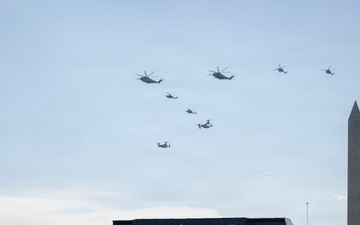
President Donald J. Trump, Secretary of War Pete Hegseth and Joint Chiefs Chairman Air Force Gen. Dan Caine host the 25th Anniversary 9/11 Observance Ceremony at the Pentagon, Sept. 11, 2026. The event honors the 184 lives lost at the Pentagon in the 2001 terrorist attack.
This summer, a MagNav was installed on an Embraer 170 aircraft. The MagNav system provides navigation capability without GPS, using the Earths own magnetic field. To demonstrate the system, the aircraft flew route over the Pacific Ocean, from Seattle's Puget Sound to southern Alaska and back. (Defense Innovation Unit photo)
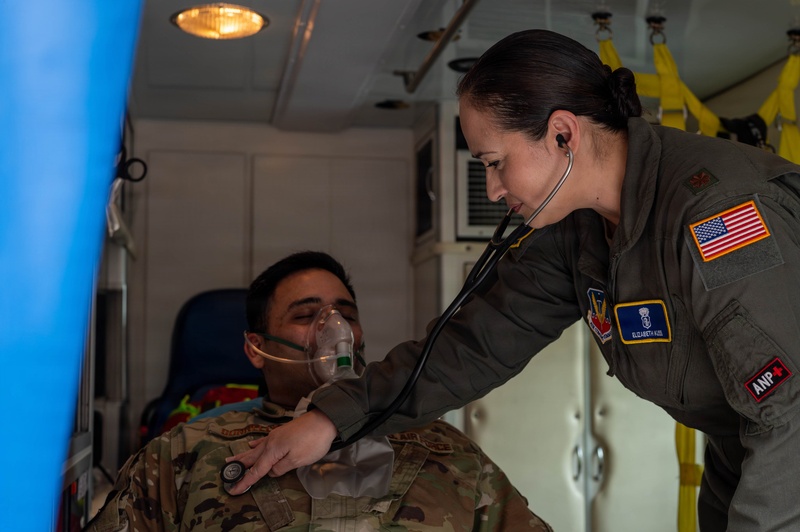
The small, brain-shaped coin felt heavier than its size, a quiet symbol of gratitude that brought tears as she recalled its meaning. It was a gift from an Air Force airman she once treated for lymphoma, presented to her after he not only completed treatment, but beat the cancer.
He honored his doctor by coining her — a tribute usually performed by senior leaders to recognize airmen. The gesture represented the trust placed in her during one of the most difficult moments of the airman's life.
"This is my favorite coin, and it reminds me how special this [moment] was for both of us," said Air Force Maj. Elizabeth Kuss, 325th Operational Medical Readiness Squadron flight medicine flight commander. "I don't do this job to...
Hungry individuals don’t put much thought into the packaging of their food. When people grab a snack, they generally rip into it and toss it aside to get to the good stuff.
Batteries for cellphones and other small devices deplete quickly outside in the winter. To make sure warfighters are focused on the mission — and not the temperature or malfunctioning equipment — War Department experts are creating specialized technology and adapting current equipment to survive in frigid climates.
As the U.S. military and its adversaries shift focus to the Arctic, working with partner nations in cold-weather regions to make sure our warfighters can survive those extremes has never been more important.
As the race to control the Arctic intensifies, more research is focused on how to optimize service member performance in the extreme cold. Researchers at the U.S. Army Research Institute of Environmental Medicine’s Military Nutrition Division in Natick, Mass., study physiological stressors that warfighters encounter to determine the best way to deliver the right nutrition and energy to increase warfighter lethality.
A lab in Natick, Massachusetts, tests recipes and evaluates commercial kitchen equipment specifically for naval vessel galleys to help make life easier for culinary specialists and to give more options to sailors on board.
The Armed Forces Recipe Service's food technologists, chefs and dietitians develop recipes for dining facilities on land, at sea and on the go, and they’ve already mapped out how to scale-up recipes to feed large contingents.
Every year, food scientists at the Army labs in Natick, Massachusetts, work to develop new components for meals ready to eat based on warfighter feedback received by each service to add variety or replace unpopular items.