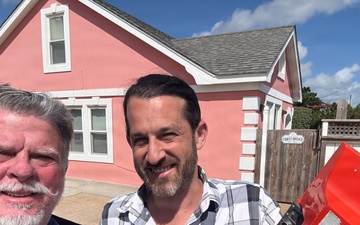
By Dale A. Wisnieski, Safety and Occupational Health Manager
USMC Risk Management Directorate - Safety Division
(Editor’s Note: This article came from a submission for the upcoming [Ground Warrior Magazine](https://navalsafetycommand.navy.mil/Media/Mags-Pubs/Ground-Warrior/) Winter Edition. The message is very fitting for the Navy AND Marine Corps motorcycle communities. Read and heed.)
In the Marine Corps, accountability isn't a buzzword; it's the bedrock of trust between the Marine on your left and right. We are entrusted with immense responsibility, from the fire team to the Marine Expeditionary Force, and with that comes an absolute requirement for accountability, not just for our careers, but for the readiness of our unit and...
08.05.2026 | NORFOLK, VIRGINIA, US |
Courtesy Story
By Dale A. Wisnieski, Safety and Occupational Health Manager
USMC Risk Management Directorate - Safety Division
(Editor’s Note: This article came from a submission for the upcoming [Ground Warrior Magazine](https://navalsafetycommand.navy.mil/Media/Mags-Pubs/Ground-Warrior/) Winter Edition. The message is very fitting for the Navy AND Marine Corps motorcycle communities. Read and heed.)
In the Marine Corps, accountability isn't a buzzword; it's the bedrock of trust between the Marine on your left and right. We are entrusted with immense responsibility, from the fire team to the Marine Expeditionary Force, and with that comes an absolute requirement for accountability, not just for our careers, but for the readiness of our unit and...
08.05.2026 | NORFOLK, VIRGINIA, US |
Courtesy Story
By Dale A. Wisnieski, Safety and Occupational Health Manager
USMC Risk Management Directorate - Safety Division
(Editor’s Note: This article came from a submission for the upcoming [Ground Warrior Magazine](https://navalsafetycommand.navy.mil/Media/Mags-Pubs/Ground-Warrior/) Winter Edition. The message is very fitting for the Navy AND Marine Corps motorcycle communities. Read and heed.)
In the Marine Corps, accountability isn't a buzzword; it's the bedrock of trust between the Marine on your left and right. We are entrusted with immense responsibility, from the fire team to the Marine Expeditionary Force, and with that comes an absolute requirement for accountability, not just for our careers, but for the readiness of our unit and...
08.05.2026 | NORFOLK, VIRGINIA, US |
Courtesy Story
This video was made in Adobe After Effects and Adobe Premiere Pro to promote weapons safety. The Naval Safety Command enables the Navy's ability to identify, communicate and account for risk through assessments, investigations and Navy-wide policy development. (U.S. Navy video by Mass Communication Specialist 2nd Class Felix Castillo Reyes)
In the Marine Corps, accountability isn't a buzzword; it's the bedrock of trust between the Marine on your left and right. We are entrusted with immense responsibility, from the fire team to the Marine Expeditionary Force, and with that comes an absolute requirement for accountability, not just for our careers, but for the readiness of our unit and the welfare of our team.
Tower rappelling is a high-risk activity demanding strict adherence to safety protocols. Whether for training, rescue or recreation, proper use of equipment, knowledge of knots and effective rope management are important to prevent accidents and ensure a safe descent.
One of the unique features of the Staff Non-Commissioned Officer Degree Completion Program (SNCODCP) is it allows enlisted Marines to finish their degree by attending college full-time and fully funded on a college campus.
The Marine Corps operates in some of the world’s loudest environments. The importance of hearing conservation in the Marine Corps cannot be overstated. Auditory readiness often makes the difference between mission success and failure.
In a major step toward modernization, the U.S. Marine Corps and U.S. Army jointly released an update to their range safety policies, MCO 3570.1D/AR 385-63, in May 2025, superseding MCO 3570.1C and DA PAM 385-63.
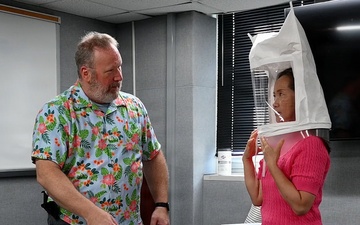
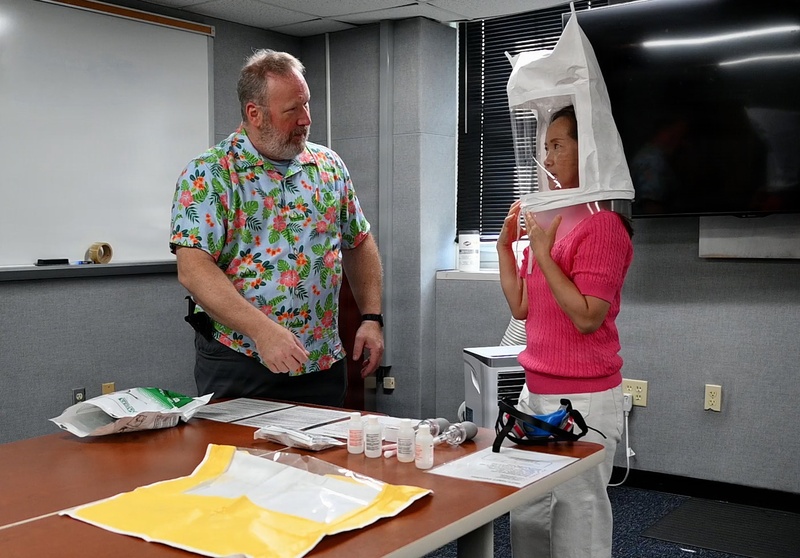
Naval Safety and Environmental Training Center (NAVSAFENVTRACEN) staff demonstrate one of the respirator fit testing methods taught during the Respiratory Protection Program Manager’s (RPPM) course. The RPPM course, which earned its American Council on Education (ACE) recommendation for college credit July 29, 2026, provides students with the knowledge and practical skills required to establish, administer, evaluate and continuously improve respiratory protection programs per Department of War, Department of the Navy and Occupational Safety and Health Administration requirements. This image was produced by taking a still from a TRACEN training video produced July 12, 2026. (U.S. Navy photo by Mass Communication Specialist 1st Class Benjamin F. Davella)